The coenzyme longevity cannot stop talking about
Ask any longevity scientist to name the molecule of the decade and, sooner or later, three letters and a plus sign surface: NAD+. It has become the axis around which a remarkable amount of the field now turns — the subject of celebrity biohacker protocols, of Harvard laboratories, and of an entire cottage industry of capsules and clinic drips. For a molecule most people have never heard of, NAD+ carries an extraordinary weight of expectation.
Some of that fervour is justified. NAD+ is not a fashionable extract or a speculative peptide; it is a coenzyme so fundamental that life could not run its metabolism without it. And it does, measurably, decline as we age. The interesting and more disciplined question — the one that separates a durable insight from a viral one — is whether topping it back up delivers on the promise, or merely raises a number on a blood test.
What NAD+ actually is
NAD+ — nicotinamide adenine dinucleotide, chemical formula C21H27N7O14P2 — is a coenzyme present in every living cell. It does two jobs that matter enormously for aging. First, it is the central shuttle of cellular energy: in the mitochondria, NAD+ ferries the electrons that ultimately produce ATP, the fuel of the cell. Second, it is the obligatory fuel for a family of repair-and-maintenance enzymes — the sirtuins and the PARPs — that police DNA damage, tune metabolism and govern how gracefully a cell ages.[1]
The catch is arithmetic. Every time those repair enzymes act, they consume NAD+. As we accumulate the DNA damage and low-grade inflammation of aging, demand rises while synthesis falls, and tissue NAD+ concentrations drop — in skin, blood, muscle, liver and brain.[1] That decline is now counted among the metabolic signatures of getting older, and it is the single observation from which the entire NAD+ boom springs.
The luxury shortcut: the NAD+ IV drip
Walk into a fashionable longevity clinic in London, Dubai or Los Angeles and you will be offered the most glamorous answer to that decline: an intravenous NAD+ infusion, dripped slowly over two or three hours, often for several hundred euros a session. It is the picture of premium wellness — the reclining chair, the cannula, the promise of cellular renewal delivered straight to the bloodstream.
It is also, for now, the least evidenced option on the menu. Rigorous published trials showing that IV NAD+ slows aging or restores healthspan are essentially absent; the practice has run far ahead of the science. Pharmacologically there are real questions, too: infused NAD+ is a large, charged molecule that is substantially broken down in the blood before intact cells can take it up, and pushed too quickly it produces flushing, nausea, cramping and chest tightness — which is precisely why the drips are run so slowly. The honest reading is that the IV NAD+ drip is a luxury experience in search of the evidence its price implies. The more studied route to raising NAD+ is, unglamorously, taken by mouth.
NMN vs NR: the two oral precursors
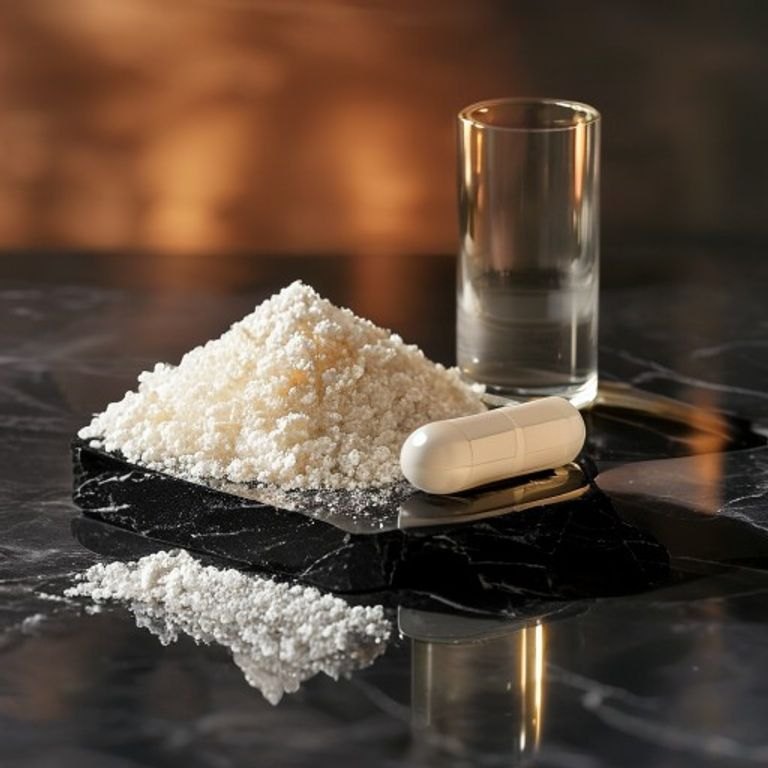
Because NAD+ itself is poorly absorbed as a pill, supplements deliver its precursors — smaller building blocks the body assembles into NAD+ along a well-mapped salvage pathway. Two dominate the market, both derived from vitamin B3.
NR (nicotinamide riboside, C11H15N2O5+) is the smaller molecule and sits one step further up the pathway. It has the longer scientific pedigree, with the earliest and most numerous published randomised trials in humans. NMN (nicotinamide mononucleotide, C11H15N2O8P) is one biochemical step closer to NAD+, carrying an extra phosphate group, and has attracted the louder consumer following — propelled in no small part by high-profile scientists who take it themselves.
The tribal debate over which is superior generates far more heat than the data justify. Both are converted to NAD+ inside the cell; both raise blood NAD+ in trials; both have clean short-term safety records. There is, as yet, no convincing head-to-head human study crowning a winner for longevity. The precursor you can source in verified, third-party-tested quality matters more than which of the two names is on the label.
What the human trials actually show
Here the story becomes genuinely encouraging — provided we read it precisely. The human evidence is real, but it concerns surrogate markers, not lifespan.
The clearest demonstration that the boosters do what they claim came from a 2022 randomised, multicentre, placebo-controlled trial published in GeroScience. Eighty healthy middle-aged adults took placebo or 300, 600 or 900 mg of NMN daily for sixty days. Blood NAD+ rose significantly and dose-dependently in every treated group, the supplement was well tolerated, and — more interestingly — the treated groups walked measurably farther in a six-minute walking test and held their blood biological-age score steady while the placebo group’s worsened.[2] The 600 mg dose captured most of the benefit.
A landmark 2021 trial in Science sharpened the picture on metabolism. In postmenopausal women with prediabetes who were overweight or obese, ten weeks of NMN significantly improved skeletal-muscle insulin sensitivity and insulin signalling — a clean, mechanistically grounded result in exactly the population where metabolic aging bites hardest.[3] On the NR side, a 2018 crossover trial in Nature Communications established that chronic NR is well tolerated in middle-aged and older adults, reliably elevates NAD+, and hinted at reductions in blood pressure and arterial stiffness worth chasing in larger studies.[4] A companion NR study in Cell Reports confirmed the compound reaches aged human muscle and dampens circulating inflammatory cytokines.[5]
Taken together, this is a respectable body of work: the precursors are safe over the studied windows, they genuinely raise NAD+, and they move several markers — insulin sensitivity, physical performance, inflammation, vascular stiffness — in the right direction. For a supplement category, that is well above the usual bar.
The honest limitation: a number is not a longer life
And yet the discipline of longevity is knowing exactly where the evidence stops. Every trial above shares the same ceiling: it measured a surrogate, not survival. Not one has shown that raising NAD+ in humans extends lifespan, compresses illness into fewer years, or reverses aging in any hard-outcome sense. The studies are small, they run for weeks or a couple of months, and the field’s own reviewers say so plainly — a 2023 overview in Advances in Nutrition concluded that human NMN data, while promising on safety and NAD+ elevation, remain preliminary on clinical benefit.[6]
Two further cautions belong in any honest account. First, more NAD+ is not automatically better: the same PARP and sirtuin machinery that repairs healthy cells can also help stressed or pre-cancerous ones survive, and the long-term consequences of chronically elevated NAD+ in humans are simply unknown. Second, the pharmaceutical-grade formulations now entering trials — such as the microcrystalline NMN compound MIB-626 studied at Harvard, which produced large, dose-dependent NAD+ increases in older adults[7] — are being tested precisely because the earlier consumer-grade evidence, encouraging as it is, was never designed to answer the question that matters: does this help you live better, for longer? Until those trials report, restraint is not pessimism. It is respect for the data.
How to raise NAD+ sensibly
For anyone building a considered regimen, the evidence points to an elegantly unfashionable hierarchy.
- Move first — it is the best-proven NAD+ lever. Regular exercise, especially the kind that stresses your muscles and mitochondria, raises NAD+ and the enzymes that build it, with a mountain of independent evidence for healthspan that no capsule can match. It is also free.
- Protect the basics. Good sleep, avoiding chronic overeating and limiting the metabolic and UV damage that drains NAD+ all preserve the pool you already have. NAD+ biology sits downstream of the same habits that support healthy mitochondria and the autophagy pathways longevity keeps returning to.
- If you add a precursor, choose quality over tribe. Both NMN and NR are well tolerated in trials at common doses; typical studied ranges are roughly 250–900 mg a day. Third-party-tested purity matters far more than the NMN-versus-NR argument. Treat it as one refined addition, not a foundation.
- Be sceptical of the drip. The IV NAD+ infusion is the most expensive and least evidenced route. Spend the money on the fundamentals first.
- Hold expectations at the level of the evidence. Like taurine and other trending molecules, NAD+ precursors are promising and under-proven in equal measure. That is a reason for measured interest, not breathless certainty.
The royal verdict
NAD+ deserves its place at the centre of the longevity conversation. The underlying biology is real and beautifully mapped: a coenzyme that powers repair, that falls with age, and that we can measurably restore. The oral precursors NMN and NR are, on current evidence, safe over the studied horizon and reliably lift NAD+ — and in careful trials they nudge the markers of metabolic aging in the direction anyone would want.
But the Longevity Royal position stays deliberately composed, because the molecule’s promise is not yet its proof. No human has been shown to live longer for raising their NAD+, the luxury IV drip is elegance without an evidence base, and more is not reflexively better. The refined approach is the same one the science keeps rewarding: earn your NAD+ through movement and sleep first, add a well-sourced precursor as a considered guest rather than the centrepiece, and let the large trials now underway tell us what the number truly buys. Age beautifully by restoring what time takes — measured against the evidence, not the marketing.
Common questions
Does taking NAD+ or NMN actually reverse aging?
Not yet proven. NAD+ (chemical formula C21H27N7O14P2) is a coenzyme every cell needs for energy and DNA repair, and its levels fall with age.[1] Human trials show that oral precursors such as NMN and nicotinamide riboside (NR) reliably raise blood NAD+ and are well tolerated over weeks to a couple of months.[2][4] What they have not yet shown in humans is that this restored NAD+ translates into a longer life. The strongest human results so far are improvements in surrogate markers — insulin sensitivity, physical performance, inflammation and blood pressure — not proof of a longer healthspan.[6]
What is the difference between NMN and NR?
NMN (nicotinamide mononucleotide, C11H15N2O8P) and NR (nicotinamide riboside, C11H15N2O5+) are both vitamin-B3-derived molecules the body converts into NAD+. NR is one biochemical step further from NAD+ and is the smaller molecule; NMN is one step closer and carries an extra phosphate group. In practice both raise blood NAD+ in human trials, both have a good short-term safety record, and there is no convincing head-to-head evidence that one is clearly superior for longevity. NR has the longer track record of published randomised trials, while NMN has attracted the louder consumer hype.
Are NAD+ IV drips worth it?
NAD+ intravenous drips are a popular luxury-clinic offering, but the evidence behind them is thin. There are almost no rigorous published trials showing that IV NAD+ slows aging, and the infusions are slow and can cause flushing, nausea and chest tightness if run too fast, since much of the infused NAD+ is broken down before cells can use it. For most people, the sensible, evidence-aligned levers for NAD+ — regular exercise, good sleep and, if desired, an oral precursor — are far cheaper and far better studied than an IV drip.
References
Study data sourced via PubMed.
- Song Q, Zhou X, Xu K, et al. The safety and antiaging effects of nicotinamide mononucleotide in human clinical trials: an update. Adv Nutr. 2023;14(6):1416–1435. PubMed · doi:10.1016/j.advnut.2023.08.008
- Yi L, Maier AB, Tao R, et al. The efficacy and safety of β-nicotinamide mononucleotide (NMN) supplementation in healthy middle-aged adults: a randomized, multicenter, double-blind, placebo-controlled, parallel-group, dose-dependent clinical trial. GeroScience. 2023;45(1):29–43. PubMed · doi:10.1007/s11357-022-00705-1
- Yoshino M, Yoshino J, Kayser BD, et al. Nicotinamide mononucleotide increases muscle insulin sensitivity in prediabetic women. Science. 2021;372(6547):1224–1229. PubMed · doi:10.1126/science.abe9985
- Martens CR, Denman BA, Mazzo MR, et al. Chronic nicotinamide riboside supplementation is well-tolerated and elevates NAD+ in healthy middle-aged and older adults. Nat Commun. 2018;9(1):1286. PubMed · doi:10.1038/s41467-018-03421-7
- Elhassan YS, Kluckova K, Fletcher RS, et al. Nicotinamide riboside augments the aged human skeletal muscle NAD+ metabolome and induces transcriptomic and anti-inflammatory signatures. Cell Rep. 2019;28(7):1717–1728.e6. PubMed · doi:10.1016/j.celrep.2019.07.043
- Song Q, Zhou X, Xu K, et al. The safety and antiaging effects of nicotinamide mononucleotide in human clinical trials: an update. Adv Nutr. 2023;14(6):1416–1435. PubMed · doi:10.1016/j.advnut.2023.08.008
- Pencina KM, Lavu S, Dos Santos M, et al. MIB-626, an oral formulation of a microcrystalline unique polymorph of β-nicotinamide mononucleotide, increases circulating nicotinamide adenine dinucleotide and its metabolome in middle-aged and older adults. J Gerontol A Biol Sci Med Sci. 2023;78(1):90–96. PubMed · doi:10.1093/gerona/glac049